

Journey through the captivating evolution of money
From ancient barter systems in India to the revolutionary rise of blockchain and digital currencies, discovering how innovations like UPI and CBDCs are transforming India’s economy in 2025 and beyond.
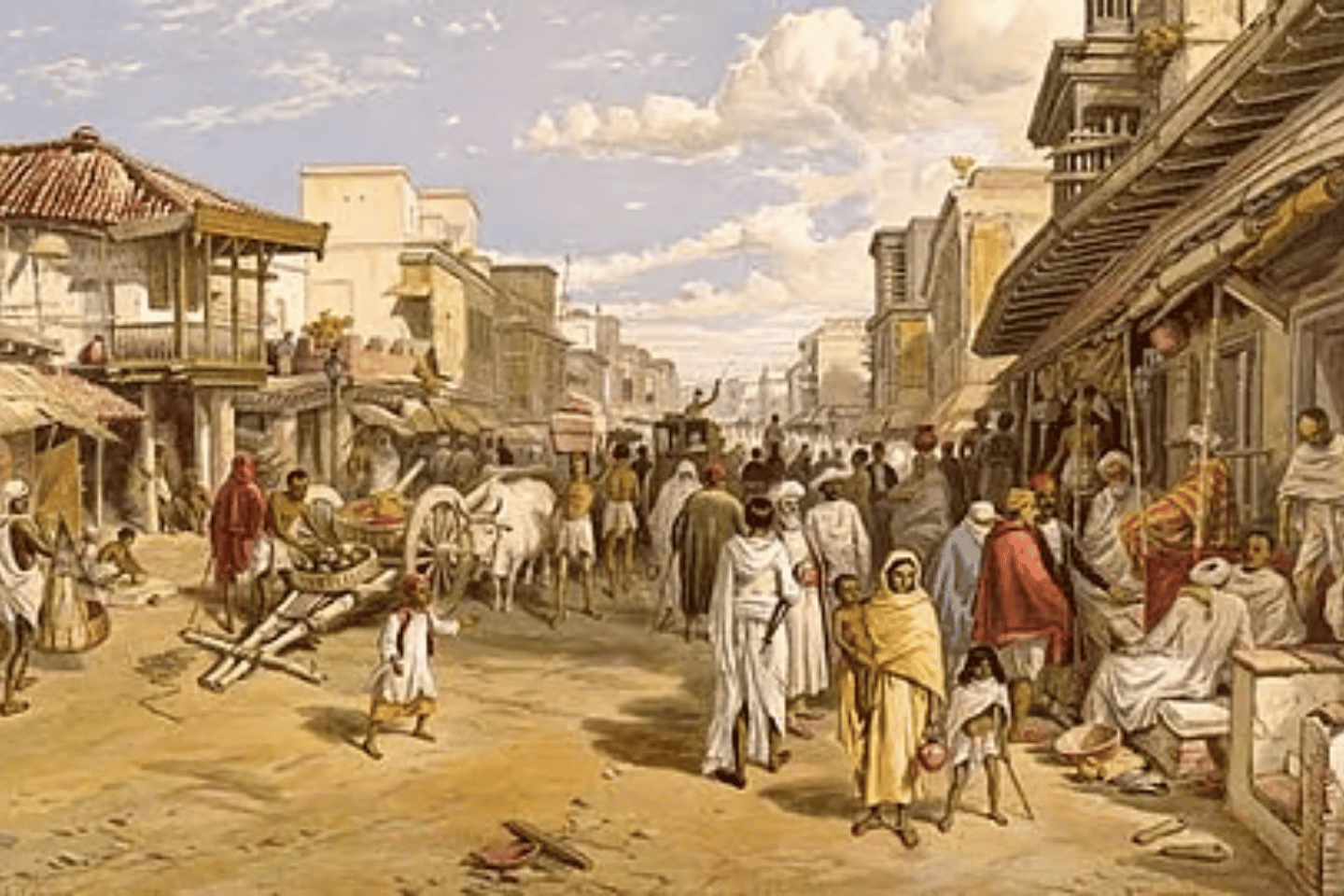
In the lively bazaars of ancient India, where merchants haggled over spices and textiles, money’s story began with simple trades that built communities and trust. As centuries unfolded, this tale wove through gleaming coins, paper notes, and now, invisible digital flows. Throughout my experience in the branding and tech industry, I’ve seen how these changes mirror our society’s growth, making finance more inclusive and efficient. Let’s explore this engaging narrative of the evolution of money, focusing on India’s pivotal role, from humble beginnings to the exciting world of blockchain and digital currency.
By S Rahul, Co-founder of ByBranding OrgIn and Blockchain Expert at GoCrypto.Today
“Money evolves with us, from tangible trades to digital dreams, it’s always about building trust in a changing world.”
S. Rahul - Brand Architect
Ancient Beginnings: Barter Systems and Early Trade in India
Picture the Indus Valley Civilization around 2500 BCE, where farmers exchanged grains for pottery in thriving settlements like Mohenjo-Daro. This barter system was the foundation of commerce, relying on mutual needs and community bonds. However, its limitations— like mismatched desires or perishable goods— sparked the need for something more reliable.
In ancient India, items like cowrie shells and beads served as early currency, symbolizing value across regions. By the Vedic period, references in texts like the Rigveda hint at rudimentary exchanges, setting the stage for organized trade. These systems not only facilitated economic growth but also cultural exchanges along routes connecting India to the world.
Key Milestones in Indian Trade (Ancient → Modern → Future)
Indus Valley Civilization (c. 3300–1300 BCE)
Urban trade hubs (Harappa, Mohenjo-Daro).
Export of beads, cotton textiles, ivory, precious stones.
Links with Mesopotamia by land & sea.
Vedic Period (c. 1500–600 BCE)
Barter to proto-currency (cowrie shells, metal pieces).
Agriculture & cattle formed trade foundations.
Mauryan Empire (c. 322–185 BCE)
Standardized punch-marked coins.
State-controlled trade with Persia, Central Asia, Sri Lanka.
Highways (Uttarapatha, Dakshinapatha) boosted commerce.
Post-Mauryan & Early Common Era (200 BCE–300 CE)
Indo-Greek, Kushan & Satavahana trade.
Indo-Roman trade boom (spices, pearls, silk for Roman gold).
Key ports: Muziris, Bharuch, Tamralipti.
Gupta Empire (c. 320–550 CE)
“Golden Age of Indian Trade.”
Silk Route exchanges with China & Central Asia.
Maritime expansion to Southeast Asia.
South Indian Kingdoms (600–1200 CE)
Cholas, Cheras, Pandyas dominated Indian Ocean trade.
Powerful naval networks to Sri Lanka, Southeast Asia, Arabia.
Exports: pepper, cardamom, silk, cotton, gems.
Delhi Sultanate (1206–1526 CE)
Integrated into global Islamic trade networks.
Ports like Calicut & Cambay thrived.
Export of textiles, spices, indigo to Middle East & Africa.
Mughal Empire (1526–1707 CE)
World leader in textiles & luxury exports.
Surat, Bengal, Gujarat major hubs.
Entry of European traders (Portuguese, Dutch, French, British).
Colonial Era (1700s–1947 CE)
East India Company monopoly.
Raw material supplier (cotton, indigo, opium).
Deindustrialization of Indian handicrafts.
Railways, ports built for British trade exploitation.
Post-Independence India (1947–1991 CE)
Focus on self-reliance & import substitution.
Slow integration into global markets.
State-led industries and limited foreign trade.
Liberalization Era (1991–2000s)
Economic reforms opened India to globalization.
Surge in IT services, textiles, pharmaceuticals exports.
Integration into global trade organizations (WTO, ASEAN links).
Digital & Global India (2010s–Present)
Rise of e-commerce, fintech, and digital payments (UPI, Paytm, PhonePe).
India as IT & startup hub, exporting services worldwide.
Expanding role in global supply chains.
The Future: Blockchain & Crypto Economy (2020s →)
Blockchain reshaping trade transparency & security.
Cryptocurrencies emerging as cross-border value exchange.
Web3 & DeFi creating decentralized financial networks.
India positioning itself as a leader in digital assets, CBDCs (Digital Rupee), and blockchain innovation.
The Coinage Era: Standardization and Empires' Influence
As kingdoms rose, so did the need for portable and verifiable value. In India, the Mauryan Empire under Chandragupta introduced punched-mark coins around 600 BCE, made from silver and stamped with symbols of authority. These early coins standardized trade, making it easier to conduct business across vast territories.
The Gupta Empire’s golden age brought dinars of pure gold, renowned for their craftsmanship and used in international trade. Globally, this mirrored developments like Roman aurei or Chinese ban liang, but in India, coins often bore religious motifs, blending economy with culture.
With the arrival of Islamic rulers, the Mughal era saw the silver rupee become a staple, influencing modern currency. These advancements reduced barter’s hassles, enabling taxation, armies, and infrastructure— key to empire-building.
Notable features of Indian coinage:
Punched-mark coins as one of the world’s earliest standardized currencies.
Gold dinars symbolizing prosperity during the Gupta period.
Mughal rupees that set the basis for the modern Indian rupee.
This phase marked money’s shift from personal exchanges to symbols of power, laying groundwork for centralized systems.
Paper Money and Banking: Centralization in Colonial and Modern India
The invention of paper money in 7th-century China revolutionized portability, reaching India through trade. By the 18th century, colonial powers introduced banknotes, with the British establishing the Reserve Bank of India in 1935.
Post-independence, India’s paper currency evolved with security features to combat counterfeiting. The 2016 demonetization drive, invalidating high-value notes, aimed to curb black money and push digital adoption, affecting millions but accelerating cashless trends.
Banks centralized trust, offering loans and savings, but events like the 2008 global crisis revealed risks. In India, nationalization in 1969 expanded access, yet rural areas lagged until recent reforms.
Evolution highlights:
Introduction of banknotes for easier large transactions.
Post-independence ordinances strengthening monetary policy.
Demonetization as a catalyst for digital shifts.
This era bridged physical and digital, setting India on a path to fintech leadership.
At GoCrypto.Today, we offer solutions for crypto adoption, including secure tools and resources. We empower users in the digital economy. For blockchain and crypto consultation, connect at time.gocrypto.today.
The Digital Transformation: UPI and Fintech Boom in India
The 1990s brought electronic banking to India, with ATMs and cards paving the way. The real revolution hit in 2016 with UPI, a real-time payment system linking bank accounts via mobiles.
By August 2025, UPI handles over 18 billion transactions monthly, with values surpassing Rs 90,000 crore daily. Apps like Paytm and PhonePe have made it ubiquitous, even in small towns, boosting e-commerce and remittances.
This shift aligns with India’s Digital India initiative, promoting cashless societies and financial inclusion for 1.4 billion people.
Key impacts of digital payments in India:
Financial inclusion for unbanked populations through mobile wallets.
Reduced transaction costs, spurring small businesses.
Integration with Aadhaar for secure, seamless verifications.
India’s fintech scene, valued at over $100 billion in 2025, positions it as a global leader, blending tradition with technology.
Blockchain's Arrival: Decentralizing Trust Worldwide and in India
The 2008 crisis inspired Bitcoin, introducing blockchain as a distributed ledger for secure, transparent transactions without intermediaries. This decentralization challenged traditional banking, offering resilience against failures.
In India, blockchain adoption grew post-2016, with pilots in land records (Telangana) and supply chains (agriculture). Ethereum expanded its use with smart contracts, enabling DeFi platforms where Indians access global finance.
Challenges like the 2022 crypto tax (30% on gains) haven’t deterred growth; instead, they’ve encouraged compliant innovations.
Blockchain’s key contributions:
Decentralized finance (DeFi) for borderless lending and borrowing.
Transparent supply chains reducing fraud in India’s vast markets.
Secure voting and identity systems for efficient governance.
This technology is democratizing access, especially for India’s young, tech-savvy population.
At GoCrypto.Today, we offer solutions for crypto adoption, including secure tools and resources. We empower users in the digital economy. For blockchain and crypto consultation, connect at time.gocrypto.today.
Privacy in the Digital Age: The Role of Coins Like Beldex
As digital currencies proliferated, privacy concerns arose— public ledgers expose transactions. Privacy coins like Beldex address this, using advanced cryptography for anonymous transfers.
In India, with stringent data laws, Beldex’s ecosystem—including secure messaging—offers protection. Its 2025 updates, like AI-enhanced security, make it relevant for privacy-conscious users.
Benefits for Indian users:
Shielding remittances from tracking.
Enhancing security in e-commerce.
Aligning with India’s push for data sovereignty.
Beldex represents the next layer, ensuring crypto‘s promise of freedom.
India's CBDC Frontier: e-Rupee and the Path Forward
The RBI’s e-Rupee (CBDC) pilot, launched in 2022, has expanded to retail and wholesale by 2025, with circulation hitting Rs 10 billion. Integrated with UPI, it promises programmable features for subsidies and offline use in remote areas.
This positions India alongside global leaders like China’s digital yuan, blending central control with digital efficiency.
Future prospects:
Reducing cash dependency, curbing black money.
Boosting cross-border payments via BRICS collaborations.
Fostering innovation in fintech startups.
India’s CBDC could transform remittances, worth $100 billion annually, making them faster and cheaper.
Challenges and Opportunities: Navigating India's Digital Money Landscape
Despite progress, hurdles like cybersecurity threats and digital divides persist. The 2024 crypto bill aims to regulate, balancing innovation with safety.
Opportunities abound: Blockchain in agriculture for transparent supply chains, or DeFi empowering SMEs.
For India, addressing these could unlock a $5 trillion economy by 2027, driven by digital finance.
A Visionary Horizon: How Digital Currencies Will Reshape Economies
Envision a future where digital currencies like Bitcoin serve as global reserves, Beldex ensures privacy, and CBDCs enable instant, inclusive transactions. In India, this means empowered farmers, seamless global trade, and AI-driven financial advice.
With quantum-resistant tech on the horizon, money will be smarter, safer, and more equitable, redefining prosperity for billions.
Why Collaborate with Us?
At ByBranding OrgIn, our team crafts strategic brand identities that drive growth and loyalty for businesses worldwide. We blend creativity with data-driven insights to ensure your brand resonates. For branding consultation, visit time.branding.org.in.
At GoCrypto.Today, we specialize in building trusted crypto and blockchain brands, simplifying complex concepts with clarity and creativity. For blockchain and crypto consultation, connect at time.branding.org.in.
Conclusion: India's Role in Money's Next Chapter
From barter’s simplicity to blockchain‘s sophistication, money’s evolution is a testament to human ingenuity. In India, with UPI and CBDCs leading, the future holds promise for inclusive growth. As we embrace these changes, let’s build a digital economy that benefits all.
Written by Rahul, Co-founder of ByBranding OrgIn and Blockchain Expert at GoCrypto.Today. Explore my portfolio at s-r.co.in or connect for consultation at time.branding.org.in.