

Introduction
Resident Evil Death Island places Leon in confined spaces where threats build slowly, his responses still sharp but carrying an undercurrent of effort. The code operates, but moments of lag appear, where the accumulated weight presses without outlet. As a fan noting this turn, I see the strain in his measured steps, a sign that endurance has its edges.

When control starts to slip
Control slips in small ways for Leon, where once-automatic actions now require focus. A brief hesitation before a door, a glance that lingers too long—these reveal where the system strains. That subtle shift carries forward, a quiet signal of overload.

The cost of holding everything together
Holding together demands more now, Leon’s efficiency masking the effort to suppress rising doubt. The cost shows in suppressed reactions, where connection to others thins further. Interactions proceed, but the internal hold tightens without ease.
- Effort to maintain focus drains without replenishment.
- Suppressed doubt surfaces in brief lapses.
- Thinning connections heighten the solitary load.
Fatigue without rest
Fatigue settles deep, Leon pushing through without the release that once came from resolution. No true rest follows containment, just the next containment. The film’s enclosed settings amplify this, where escape offers no real pause.
- Push through cycles without true breaks.
- Accumulated wear without outlet.
- Enclosed spaces mirror unrelieved pressure.

Gameplay moments where cracks appear
Death Island’s narrative echoes series mechanics, where quick-time events and chases demand precision, but repetition exposes fatigue. You press on, but inputs feel heavier, mirroring Leon’s state where cracks appear in the flow. It shows how routine frays at the edges.
- Quick-time demands reveal response lag.
- Chases test limits without recovery.
- Repetition exposes underlying wear.
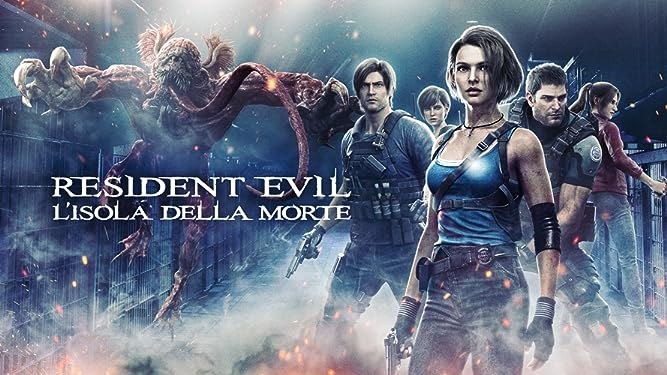
Source: https://www.zombiekb.com/2023/08/resident-evil-isola-della-morte-homevideo.html
Leon then vs Leon later
| Aspect | Resident Evil Death Island Leon | Later Leon |
|---|---|---|
| Fear | Suppressed, occasional leaks | Contained, rarely visible |
| Trust | Functional, with underlying doubt | Minimal, instinctual caution |
| Decision-making | Effortful, small hesitations | Automatic, but strained |
| Responsibility | Heavy, without relief | Resigned, enduring quietly |
Why systems eventually fail
Systems like Leon’s hold for a time, but the fractures in Death Island signal why they wear thin. The quiet leaks explain the arc’s progression, where control meets its boundary without full failure. This prepares the path ahead.
Conclusion
Leon’s fractures in Death Island surface without shattering, a strained hold that persists into what follows. That quiet pressure, gathered over time, marks the code’s limit.
If this kind of reflective writing resonates with you, you can explore more of my work and thinking here: https://s-r.co.in/ Personal essays, long-form reflections, and writing rooted in experience rather than commentary.
https://branding.org.in/ Strategic thinking on identity, storytelling, and how meaning is shaped beyond trends and noise.
https://time.branding.org.in/ A space for focused conversations, one-on-one discussions, and deeper exploration of ideas that deserve time.